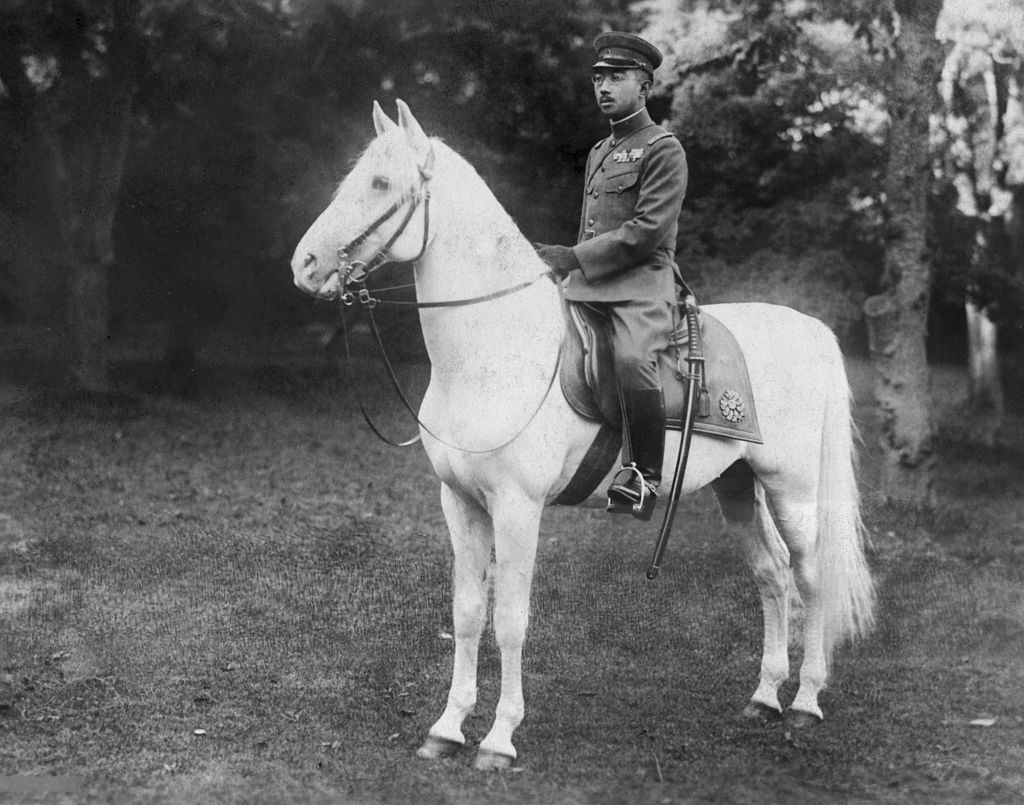
(Image: Emperor Hirohito. Wikimedia Commons.)
On this day in history, the Allies declined Japan’s offer to surrender based on the condition that Emperor Hirohito retains his status. The Japanese War Council had been split over the surrender terms; half the members wanted assurances that the emperor would maintain his hereditary and traditional role in a postwar Japan before surrender could be considered.
History Daily: 365 Fascinating Happenings Volume 1 & Volume 2 – August 11, 1945
Before the atomic attacks on Hiroshima and Nagasaki, forces within the Japanese government were trying to find a way to end the war. The United States learned that anything Japan would only agree to a “negotiated peace” involving numerous conditions. These conditions would require, at a minimum, that the Japanese home islands remain unoccupied by foreign forces and even allow Japan to retain some of its wartime conquests in East Asia. Many within the Japanese government were highly reluctant to discuss any concessions, meaning that a “negotiated peace” to them would only amount to little more than a truce where the Allies agreed to stop assailing Japan. After twelve years of Japanese war against China and over three and one-half years of war with the United States, American leaders hesitated to accept anything less than a complete Japanese capitulation.
The one possible exception to this was the status of the emperor himself. Even though the Allies had long been openly demanding “unconditional surrender,” in private, there had been some talk of absolving the emperor from war trials and permitting him to remain as ceremonial head of state. Ultimately, at Potsdam, the Allies tried to encourage those in Tokyo who advocated peace that Japan eventually would be allowed to form its government while combining these assurances with stern warnings of “prompt and utter destruction” if Japan failed to capitulate promptly. No explicit mention of the emperor possibly remaining as ceremonial head of state was made. Japan publicly rejected the Potsdam Declaration, and on July 25, 1945, President Harry Truman gave the order to commence atomic attacks on Japan as quickly as possible.
After the strike at Hiroshima on August 6, 1945, the Japanese government met to consider its next moves. The emperor had been urging since June that Japan find a way to stop the war. Still, the Japanese Minister of War and the heads of the Army and the Navy held that Japan should wait and see if mediation via the Soviet Union might create something less than conceding. Military leaders hoped that if they could hold out until the American ground invasion of Japan began, they could inflict so many casualties on the Allies that Japan still might win some negotiated peace. Next came the news of the Soviet declaration of war on Japan on August 8 and the atomic bombing of Nagasaki the following day. Another Imperial Council was held on the evening of August 9-10, and the vote on surrender was a tie, 3-to-3. For the first time in a generation, the emperor stepped forward from his normally ceremonial-only role and personally broke the deadlock, ordering Japan to surrender. On August 10, 1945, Japan offered to admit defeat, the only condition being that the emperor be allowed to remain as nominal head of state. The Allies wanted no preconditions. There was a compromise. The emperor would retain his title; General Douglas MacArthur believed his at least ceremonial presence would be a stabilizing influence in postwar Japan. But Hirohito was forced to disclaim his divine status. Japan lost more than a war – it lost a god.
The United States considered using additional nuclear weapons on August 17 or 18, depending on the weather. They had two more cities on their list, but one general proposed they bomb Tokyo with a nuclear weapon. Truman, however, ordered an immediate halt to atomic attacks while surrender negotiations were ongoing.
On August 12, America declared it would accept the Japanese surrender, making clear that the emperor could remain in a purely ceremonial capacity only. Debate raged within the Japanese government over whether to accept the American terms or not. Meanwhile, the Americans were growing impatient, and on August 13, conventional air raids resumed on Japan. Thousands more Japanese civilians died while their leaders delayed. Later that day, the emperor called another meeting of his cabinet and implored them to accept the Allied terms forthwith, explaining, “I cannot endure the thought of letting my people suffer any longer”; if the war did not end, “the whole nation would be reduced to ashes.”
The only question now was would Japan’s military leaders would allow the emperor to surrender. Loyalty to the emperor was absolute in the Japanese military, but so was the refusal to surrender. Now that the two had come into conflict, open rebellion was possible. The emperor recorded a message in which he accepted the Allied surrender terms, to be broadcast over Japanese radio the next day. This way, everyone in Japan would know that the surrender was the emperor’s will. Some within the Japanese military attempted to steal this recording before it could be broadcast.
In contrast, others attempted a more general military coup to seize power and continue the war. The Minister of War, who supported continuing the fight but could not rebel against the emperor, decided to commit suicide as the only honorable way out. In the end, his refusal to assist the coup plotters was instrumental in their defeat by elements within the military that remained loyal to the emperor.
On August 15, 1945, the emperor’s broadcast announcing Japan’s surrender was heard via radio all over Japan. For most of his subjects, it was their first time listening to his voice. The emperor explained that “the war situation has developed not necessarily to Japan’s advantage” and that “the enemy has begun to employ a new and most cruel bomb.” Over the next few weeks, Japan and the United States worked out the details of the surrender, and on September 2, 1945, the formal surrender ceremony took place on the deck of the U.S.S. Missouri.
ON SALE NOW!!!
History Daily: 365 Fascinating Happenings Volume 1
In the United States:
In Canada:
 History Daily With Francis Chappell Black
Leave a comment