EMPEROR HIROHITO ANNOUNCES JAPAN”S SURRENDER TO THE JAPANESE PEOPLE
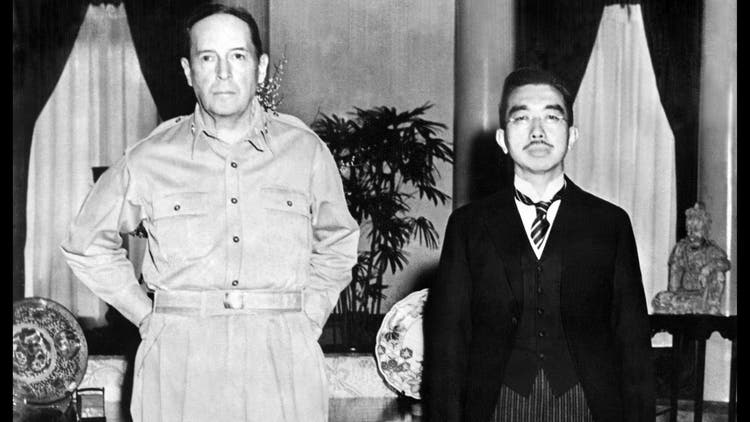
Image: General Douglas MacArthur and Emperor Hirohito (Wikimedia Commons)
Emperor Hirohito announced the news of Japan’s surrender to the Japanese people on August 15, 1945.
Although Tokyo had already agreed to the Allies’ surrender terms at the Potsdam Conference several days earlier, and a Japanese news service announcement stated this fact, the Japanese people were still waiting to hear from a high-ranking official about the unfathomable: Japan had been defeated.
They heard the emperor’s voice announce the defeat. On August 15, that voice—heard over the airwaves for the first time—told his people that Japan’s enemy “has begun to employ a most cruel bomb, the power of which to do damage is indeed incalculable, taking the toll of many innocent lives.” This was stated as the reason for Japan’s capitulation. Hirohito’s memoirs, published and translated after the war, were evidence of the emperor’s fear that “the Japanese race will be destroyed if the war continues.”
Hirohito’s status as emperor was a point of contention in the Japanese surrender terms. Tokyo wanted the emperor’s status unchanged; the Allies wanted no prerequisites. There was a compromise. The emperor would keep his title; Gen. Douglas MacArthur thought his ceremonial presence would be a steadying influence in postwar Japan. But Hirohito was forced to renounce his divine status. Japan lost much more than a war—it lost a god.
THE BATTLE OF RONCEVAUX TAKES PLACE WHERE A PORTION OF CHARLEMAGNE”S ARMY IS DEFEATED
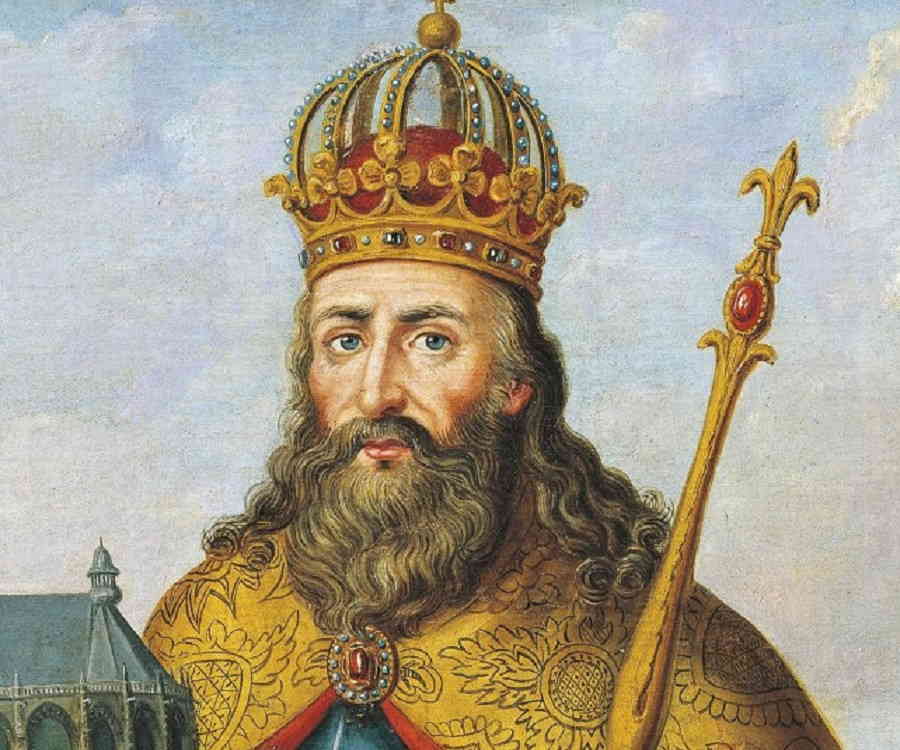
Image: Charlemagne (Wikimedia Cimmons)
On August 15, 778, the Battle of Roncevaux took place. Basque forces soundly defeat Roland, the commander of the rearguard of Charlemagne’s army.
The Battle of Roncevaux Pass in 778 saw a large force of Basques ambush a section of Charlemagne’s army in Roncevaux Pass, a high mountain pass in the Pyrenees mountains on the present border between France and Spain after he invaded the Iberian Peninsula.
The Basque attack was in retribution for Charlemagne’s devastation of the city walls of their capital, Pamplona. As the Franks withdrew across the Pyrenees back to Francia, the rearguard of Frankish lords was cut off, stood its ground, and was annihilated.
One of those killed in the battle was Roland, a Frankish commander. His death raised him and the paladins, the foremost warriors of Charlemagne’s court, into legend, becoming the ideal role model for knights and significantly affecting the code of chivalry in the Middle Ages. Numerous written works about the battle, some of which alter and embellish events. The battle is recounted in the 11th century The Song of Roland, the oldest surviving major work of French literature, and in Orlando Furioso, one of the most honored works of Italian literature. Modern versions of the battle include books, plays, works of fiction, and monuments in the Pyrenees.
A KISS FOR ADOLF HITLER
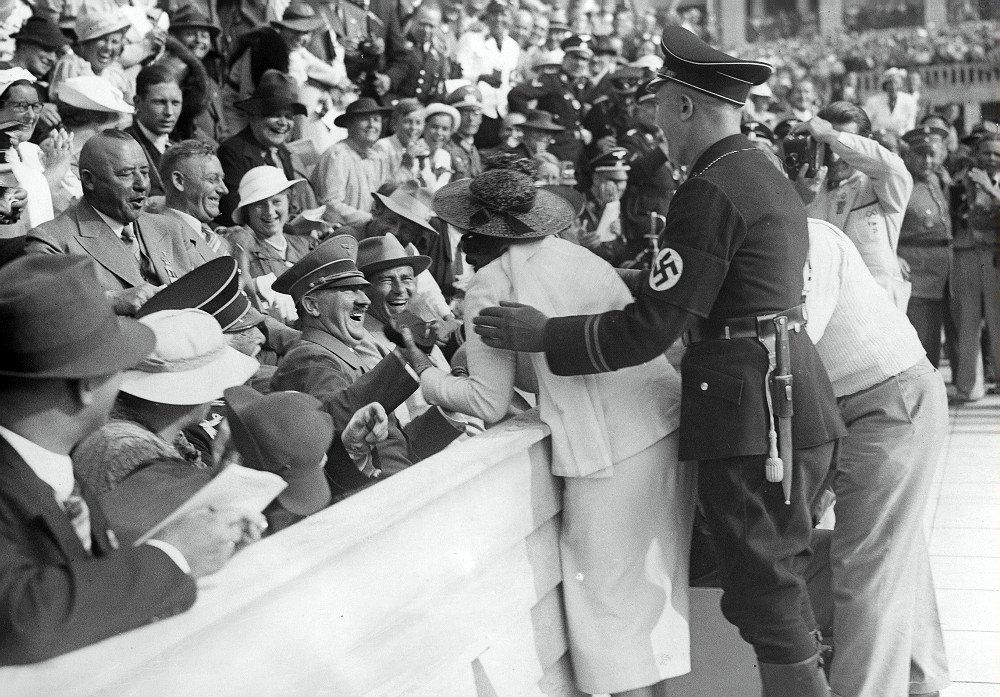
Image: A kiss for a surprised Fuehrer. (Wikimedia Commons)
On August 15, 1936, an American woman who was a spectator at the 1936 Berlin Olympics found Adolf Hitler “so friendly and gracious” that she leaned over and kissed him. There were severe repercussions for the Fuehrer’s guards.
It occurred during the 1500 meters freestyle swimming event, which was watched by 40-year-old Carla de Vries, an American tourist who went to the Olympic Games with her husband.
She was fascinated to see Hitler sitting at the front of his box and attempted several times to get near him so that she could take a photograph, but every time Black Guards blocked her.
She broke through the cordon during the excitement of the race’s finish, shaking Hitler’s hand and kissing him while the crowd roared with laughter.
Apparently, in good spirits, Hitler joined in the fun, clapping his hands as the woman returned victoriously to her seat.
Mrs de Vries later stated: “I simply embraced him because he appeared so friendly and gracious. I don’t know why I did it. Certainly, I hadn’t planned such a thing. It’s just that I’m a woman of impulses, I guess.”
“It happened when I went down to take Hitler’s picture with my small movie camera. He was leaning forward, smiling, and he seemed so friendly that I just stepped up and asked for his autograph, which he wrote on my swimming ticket.”
“He kept on smiling and so I kissed him. People sitting near his box began to cheer and applaud so loudly that I ran back to my husband and told him we had better leave.”
On protection duty, that day were members of the Schutzstaffel, the Black Guards who were to form the much-feared SS. But on this day, they could not even stop the advances of a middle-aged woman.
An unsmiling and angry Hitler later saw that several were dismissed and others demoted.
ON SALE NOW!!!
History Daily: 365 Fascinating Happenings Volume 1
In the United States:
In Canada:
Subscribe to History Daily with Francis Chappell Black for daily updates.
 History Daily With Francis Chappell Black
Leave a comment