OUTLAW JOHN WESLEY HARDIN IS MURDERED IN TEXAS
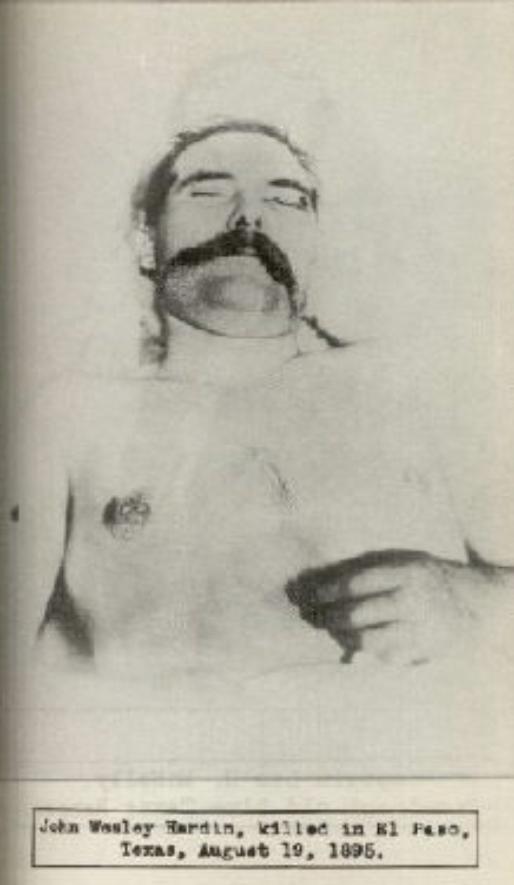
Image: John Wesley Hardin’s post mortem photo. (Wikimedia Commons.)
On August 19, 1895, John Wesley Hardin, one of the most vicious and prolific killers in the American Old West, is murdered by an off-duty policeman in a saloon in El Paso, Texas.
Born in Texas on May 26, 1853, Hardin first killed a man when he was only 15 during the brutal phase of post-Civil War Reconstruction. Over the next ten years, he killed at least 20 more men, and it has been suggested that the total might have been as high as 40.
In 1878, Hardin was convicted of murdering a Texas sheriff and sentenced to the Texas state prison in Huntsville. Prison life seems to have calmed Hardin–he studied law during his 14 years of incarceration. Released in 1892, he chose to live in Gonzales, where he worked as an attorney and tried, without success, to win political office. Eventually, Hardin relocated to El Paso, where he spent more time fighting in saloons than in court since his legal services were not required then.
In 1895, the sheriff of El Paso attempted to make the town safer by outlawing the wearing of firearms within city limits. In August, Hardin’s girlfriend was caught with a firearm in the city and arrested by El Paso officer John Selman. Hardin, who had never totally tamed his terrible temper, became angry. Bystanders overheard him threaten Selman for disturbing his woman. Not long after, on August 19, 1895, Selman went looking for Hardin. He found the infamous gunman playing dice in the Acme saloon. Quietly, Selman walked up behind Hardin and killed him with a bullet to the back of the head.
SALEM WITCH TRIALS
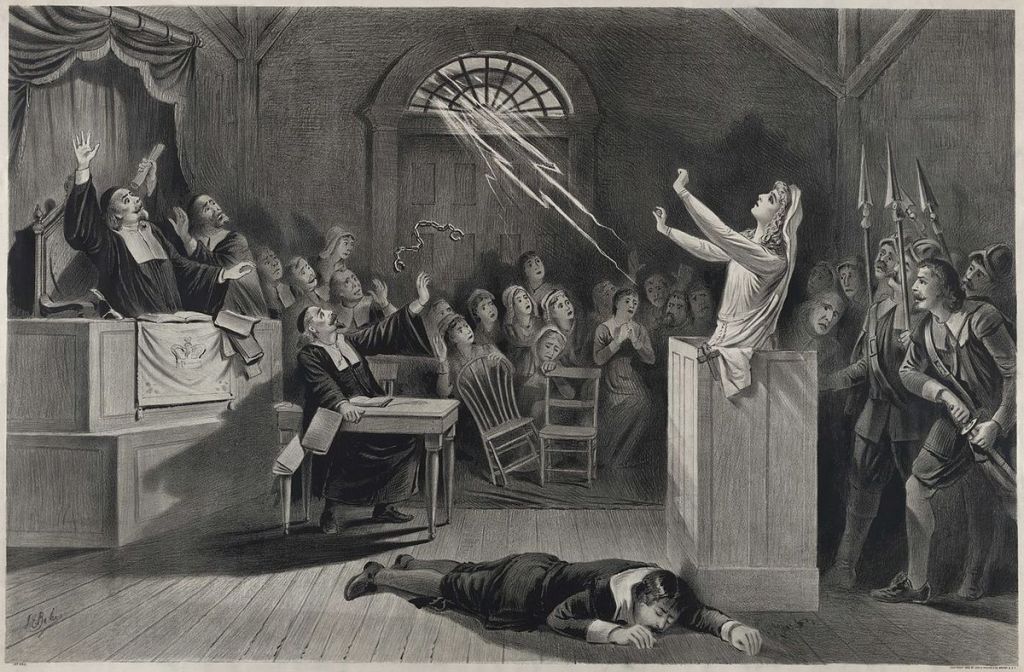
Image: Dramatic lithograph of the Salem witch trials produced in 1892.
On August 19, 1692, five more people were hanged (19 in all) in Salem, Massachusetts.
The Salem witch trials were a series of hearings and prosecutions of people accused of witchcraft in colonial Massachusetts between February 1692 and May 1693. Over 200 people were charged during that time. Thirty people were found guilty, 19 of whom were executed by hanging (14 women and five men). One other man, Giles Corey, died while being tortured after refusing to enter a plea, and five people died while in jail.
Arrests were made in several towns beyond Salem and Salem Village, notably Andover, and Topsfield. The grand juries and trials for this capital crime were conducted by a Court of Oyer and Terminer in 1692 and a Superior Court of Judicature in 1693, both held in Salem Town, where the hangings also took place. It was the deadliest witch hunt in the history of colonial America. Only fourteen other women and two men had been executed in Massachusetts and Connecticut during the 17th century.
US WARSHIP CONSTITUTION DEFEATS BRITISH WARSHIP GUERRIERE
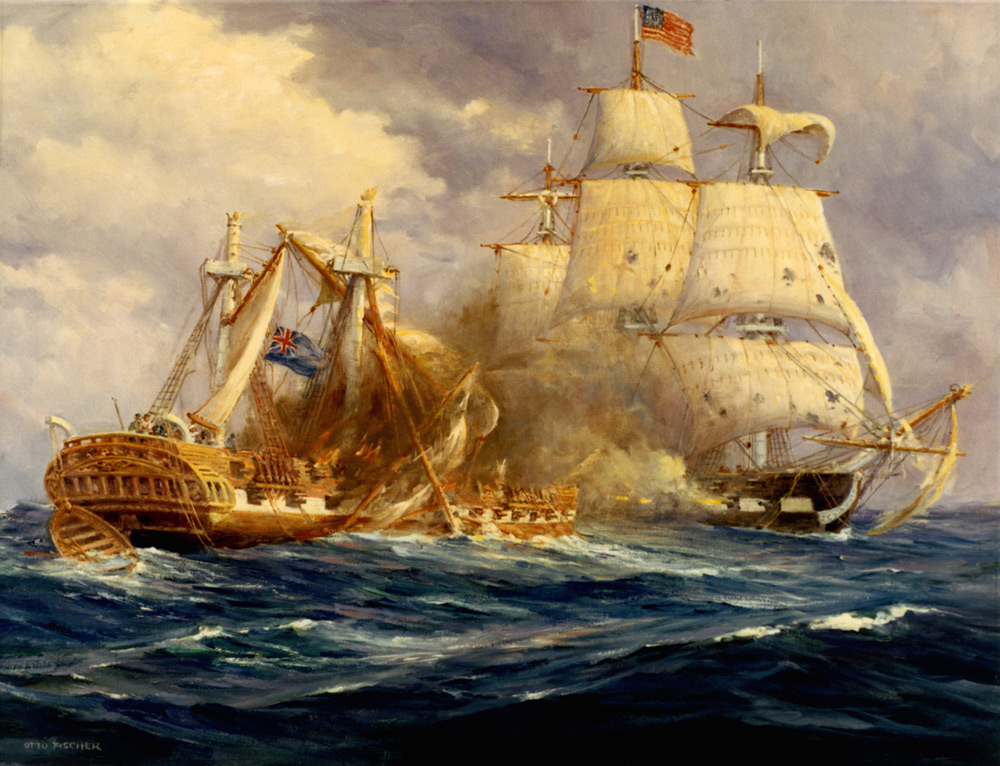
On August 19, 1812, the USS Constitution sighted HMS Guerriere. Guerriere opened fire upon entering range of Constitution but did minor damage. After a few exchanges of cannon fire between the ships, Captain Hull moved Constitution into an advantageous position within 25 yards of Guerriere. He then ordered a full double-loaded broadside of grape and round shot, which took out Guerriere’s mizzenmast. Guerriere’s maneuverability decreased with her mizzenmast dragging in the water, and she collided with Constitution, entangling her bowsprit in Constitution’s mizzen rigging. This left only Guerriere’s bow guns capable of effective fire. Hull’s cabin caught fire from the shots, but it was quickly extinguished. With the ships locked together, both captains ordered boarding parties into action, but the sea was heavy, and neither party could board the opposing ship.
At one point, the two ships rotated together counter-clockwise, with Constitution continuing to fire broadsides. When the two ships pulled apart, the force of the bowsprit’s extraction sent shock waves through Guerriere’s rigging. Her foremast collapsed, and that brought the mainmast down shortly afterward. Guerriere was now a dismasted, unmanageable hulk with nearly a third of her crew wounded or killed, while Constitution remained largely intact. The British surrendered.
Hull had surprised the British with his heavier broadsides and his ship’s sailing ability. Adding to their astonishment, many of the British shots had harmlessly ricocheted off Constitution’s hull. An American sailor reportedly shouted, “Huzzah! Her sides are made of iron!” and Constitution acquired the nickname “Old Ironsides.”
The battle left Guerriere so severely damaged that she was not worth towing to port. Hull ordered her to be burned after transferring the British prisoners onto Constitution the following day.
Constitution arrived back in Boston on August 30, where Hull and his crew found that news of their victory had spread fast, and they were hailed as heroes.
Subscribe to History Daily with Francis Chappell Black to receive daily posts:
 History Daily With Francis Chappell Black
Leave a comment