CONFEDERATE GUERILLAS MASSACRE 150 PEOPLE IN LAWRENCE, KANSAS
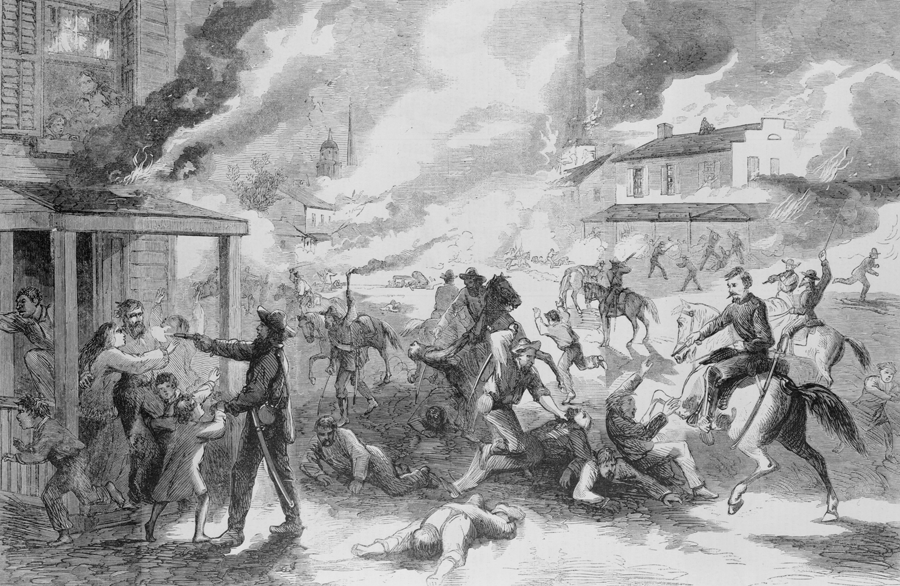
Image: An artist’s depiction of the destruction of the city of Lawrence, Kansas, and the massacre of its inhabitants by Confederate guerrillas on August 21, 1863. (Wikimedia Commons.)
The vicious guerilla war in Missouri rolls into Kansas. It triggers one of the most shocking acts of violence during the war when 150 men in the abolitionist town of Lawrence are murdered in a raid by Confederate supporters.
The American Civil War looked very different in Kansas and Missouri than in the rest of the country. Significantly few regular armies were operating there; instead, partisan bands attacked civilians and each other. The causes of the conflict in the region dated back to 1854, when the Kansas-Missouri border became ground zero for tension over slavery. While residents of Kansas Territory were trying to decide the issue of slavery, bands from Missouri, a slave state, began attacking abolitionist settlements in the territory. Abolitionists reacted with equal intensity.
When the Civil War began, the long history of loathing between partisans created unmatched violence. In August 1863, General Thomas Ewing, the Union commander along the border, arrested several wives and sisters of members of a notorious band led by William Quantrill. This gang of outlaws had blackened the region, terrorizing and murdering Union sympathizers. On August 14, the building in Kansas City, Missouri, where the women were held captive, collapsed, killing five.
Quantrill gathered 450 men to obtain revenge. The army, which included future western outlaws like the Younger brothers and Frank and Jesse James, headed for Lawrence, Kansas, long known as the center of abolitionism in Kansas. After kidnapping ten farmers to guide them to Lawrence, the gang killed each of them. Quantrill’s men rode into Lawrence, extracted 182 men from their homes, many in front of their families, and killed them outright. They burned nearly 200 buildings in Lawrence, then rode back to Missouri with Union cavalry close behind.
This incident incited the North and led to even more killing by both sides along the Kansas-Missouri border.
SEIGE OF BUDA
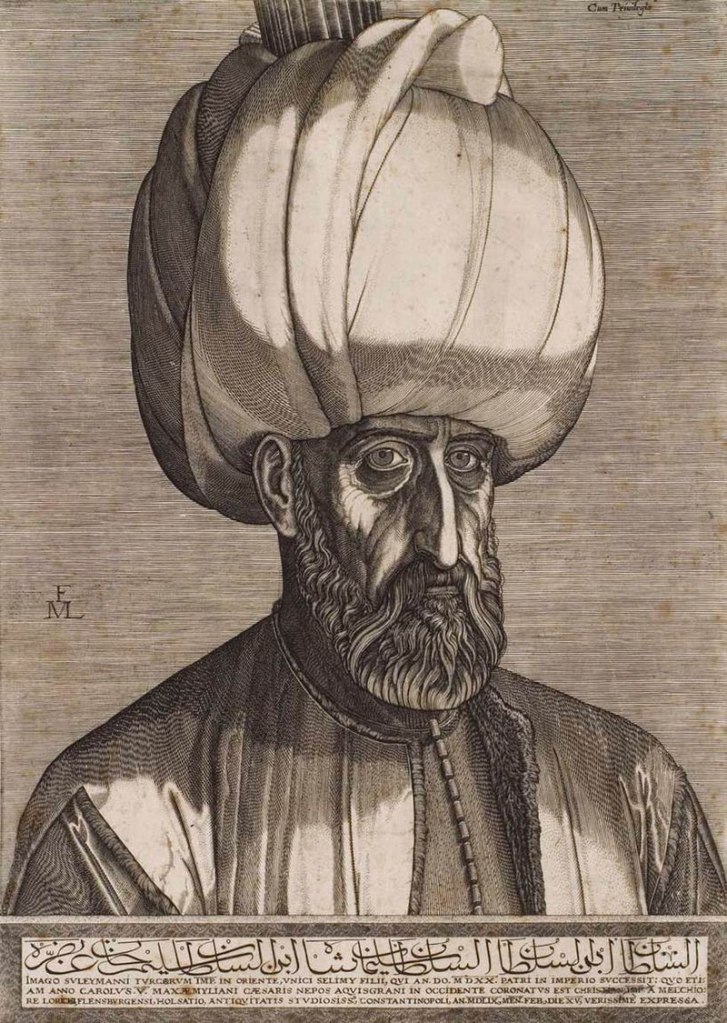
Image: Suleiman the Magnificent (Wikimedia Commons)
On August 21, 1541, Ottoman Turks, under Suleiman the Magnificent, captured Buda, the Hungarian Kingdom’s capital, and dominated central Hungary for 150 years.
The Siege of Buda, part of the Little War in Hungary, was one of the most important Ottoman victories over the Habsburg monarchy during the Ottoman–Habsburg wars (16th to 18th century) in Hungary and the Balkans. It is comparable in importance to the Battle of Mohács in 1526, where Hungary was defeated by Suleiman and the Ottomans and resulted in the partition of Hungary for several centuries between the Ottoman Empire, the Habsburg monarchy, and the Principality of Transylvania.
BATTLE OF THE CAUCASUS
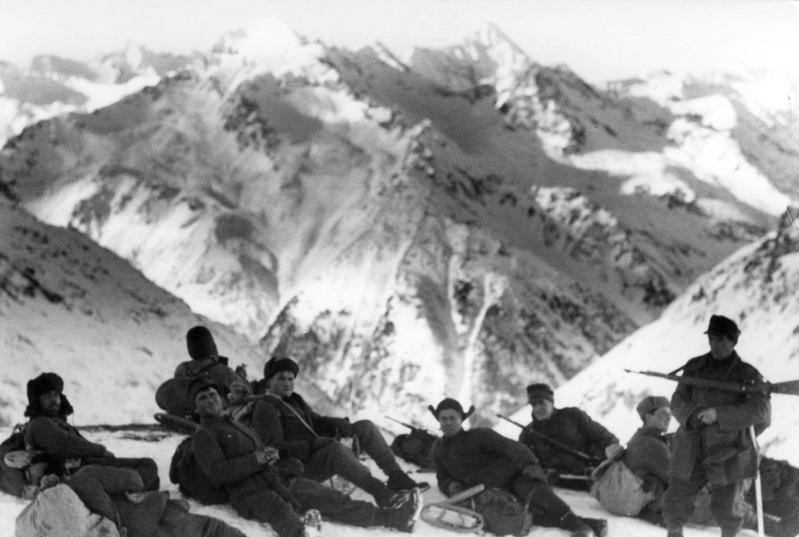
Image: German soldiers in the Caucasus (1942) (Wikimedia Commons)
On August 21, 1942 during World War II, soldiers from the German Wehrmacht’s 1st Mountain Division planted the flag of Nazi Germany on the summit of Mount Elbrus, the highest peak in both the Caucasus and Europe during the Battle of the Caucasus.
 History Daily With Francis Chappell Black
Leave a comment