THE BARKER GANG ROB A FEDERAL RESERVE MAIL TRUCK AND KILL A POLICE OFFICER WHILE GETTING AWAY WITH NO MONEY
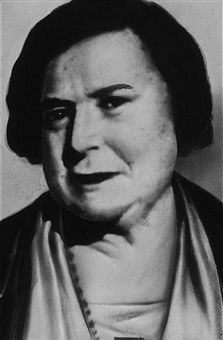
Image: Ma Barker (Wikimedia Commons)
The infamous Barker gang holds up a Federal Reserve mail truck in Chicago, Illinois, and kills a police officer. After obtaining only a stack of worthless checks, the Barkers returned to a crime with which they had more success—kidnapping. A few months later, the Barkers kidnapped wealthy banker Edward Bremer, demanding $200,000 in ransom.
After Kate Clark married George Barker in 1892, she gave birth to four boys: Herman, Lloyd, Arthur, and Freddie. As Kate became known, Ma Barker was presumably responsible for discipline in the family, but she let her sons run wild. She defended her boys no matter what they did, saying, “If the good people of this town don’t like my boys, then the good people know what they can do.”
All the Barker boys became involved in crime during their childhood: In 1922, Lloyd robbed a post office and received a 25-year sentence in federal prison; that same year, Arthur “Doc” Barker got a life sentence in Oklahoma for killing a night watchman, though later it would turn out that he was innocent; Freddie was next to see the insides of a holding cell after robbing a bank. While serving time in Kansas, Herman committed suicide during a heated gunfight with police after robbing a bank in Missouri.
Herman’s death inspired Ma Barker to pressure authorities to release her other sons, and Doc and Freddie were subsequently set free. Although Ma Barker is seen as the gang’s mastermind, historians doubt this. Whether she was behind the gang’s nefarious deeds or not, the Barkers were at the center of the Midwest’s growing criminal community. When they tired of bank robberies, the Barkers began kidnapping.
Their first victim, William Hamm, earned the gang $100,000 in ransom. Although the Bremer abduction in 1933 produced twice as much, it brought them a lot of heat from federal authorities. With the FBI on their trail, Doc and Freddie attempted plastic surgery. But this half-baked idea left them with disfiguring scars, and Doc was captured in early 1935.
Doc, who was later killed while attempting to escape from Alcatraz in 1939, refused to talk to authorities, but police found papers in his hideout that led them to Ma and Freddie on Lake Weir, Florida. After a ferocious shootout lasting 45 minutes, the Barkers lay dead from the firefight, machine guns still at their sides.
Twelve years later, Lloyd Barker was finally paroled. He, too, met a violent end, but not at the hands of the police—his wife shot him dead in 1949. Father George Barker, who was never part of the Barker gang, was the family’s sole survivor.
King George’s Rebellion Proclamation August 22, 1775
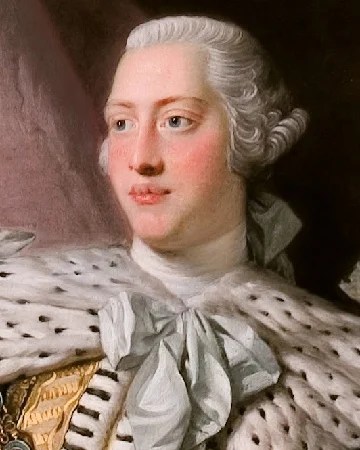
Image: King George III (Wikimedia Commons)
King George III officially proclaimed that the American colonies were in open rebellion and ordered his officials to suppress it. This was an insult to Americans who had just presented him with a petition of peace, known as the Olive Branch Petition. This document guaranteed the king that the Americans would remain his loyal subjects and had no desire for independence if their grievances were reasonably addressed. The American representatives Richard Penn and Arthur Lee gave the petition to the Secretary of State for the American colonies, Lord Dartmouth. Two days later, King George III issued his proclamation. This is one of the actions that convinced many wavering American colonists that the king genuinely sought to destroy their God-given rights and led to their Declaration of Independence the following year.
IS THIS AMERICA?
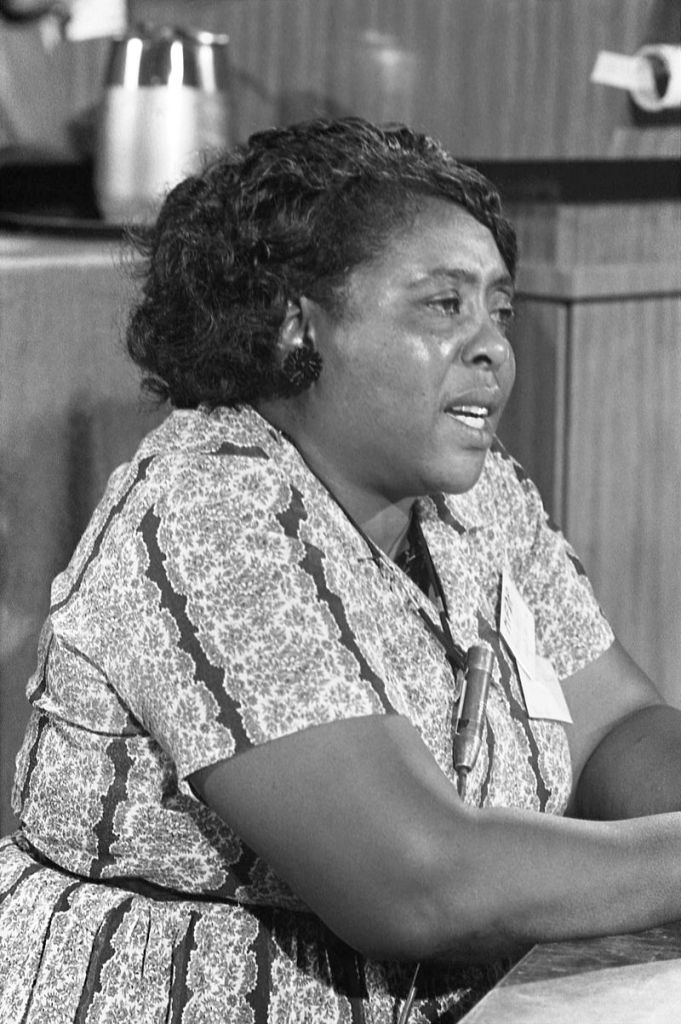
Image: Fannie Lou Hamer at the Democratic National Convention, Atlantic City, New Jersey, August 22, 1964. (Wikimedia Commons.)
On August 22, 1964, American civil rights activist Fannie Lou Hamer spoke at the U.S. Democratic National Convention about her terrifying experiences with voter registration as a Black woman in Mississippi.
The 20th child of Mississippi sharecroppers, Fannie Lou Hamer’s efforts to register to vote in Mississippi in 1962 and 1963 led to full-time activism.
Hammer went to work for the Student Nonviolent Coordinating Committee and was one of the organizers of Mississippi’s Freedom Summer, despite being badly injured after a police beating in 1963.
Hamer was one of the founders of the Mississippi Freedom Democratic Party and attended the 1964 Democratic National Convention. Her speech at the convention about her tireless efforts to attempt to register to vote was televised nationally and struck a chord with the American public. This was despite the best efforts of President Lyndon B. Johnson, who held an impromptu press conference while Hamer was speaking.
She continued to fight for equality, helped set up a pig farming bank, unsuccessfully ran for senate in 1964, and published her autobiography in 1967.
 History Daily With Francis Chappell Black
Leave a comment