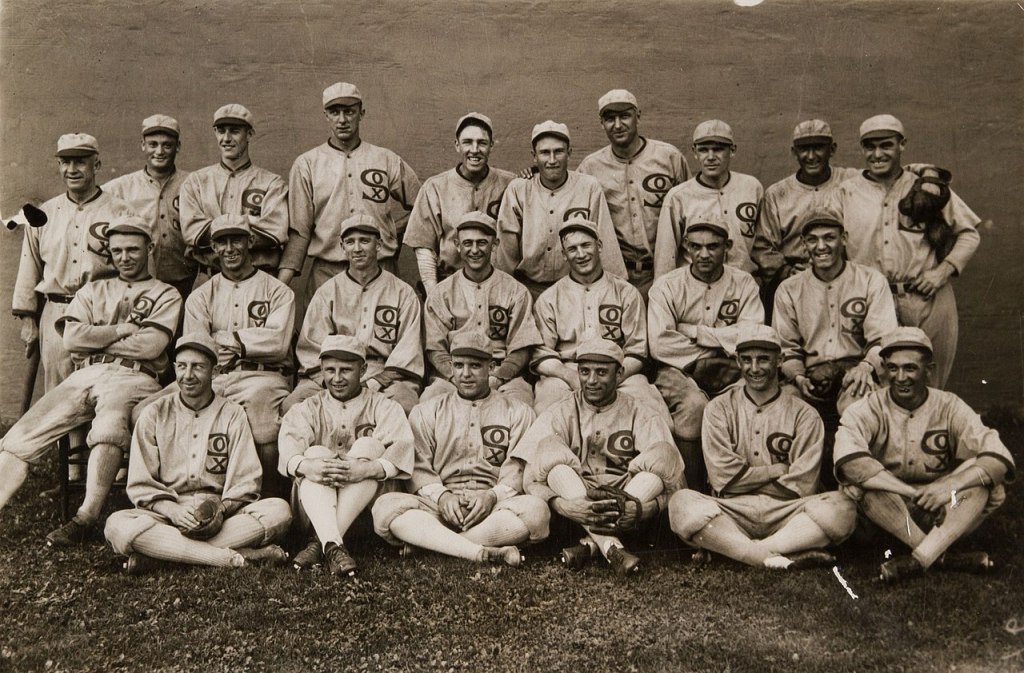
Image: 1919 Chicago White Sox team photo. (Public Domain.)
On this day in history, a Chicago grand jury indicts eight players from the Chicago White Sox on allegations of game-fixing during the 1919 World Series baseball. White Sox owner Charles Comiskey instantly suspends Chick Gandil, Buck Weaver, Happy Felsch, Swede Risberg, Fred McMullin, Eddie Cocotte, Lefty Williams, and “Shoeless” Joe Jackson, who are infamous for their participation in the “Black Sox Scandal.”
None f the participants involved in the scheme, who were brought to trial, competed for the first four months of the 1921 season. All were acquitted on August 2 of that year. Yet there would be no long-standing commemoration for any of them. Within 24 hours of their acquittal, Judge Kenesaw Mountain Landis, the newly elected Major League Baseball commissioner, banned all eight from Major League baseball for life.
Evidence indicated that the players were culpable, and many have questioned the participation of Jackson, one of the greatest MLB players of all time. But there’s no question the expulsion of the eight White Sox players left a permanent stain on baseball. Stories vary, but the plot to throw the series for cash may have first emerged a month before that year’s World Series when White Sox first baseman C. Arnold “Chick” Gandil and a gambler known as Joseph “Sport” Sullivan met to consider the prospect of Sox players intentionally losing in the championship series.
Gandil later asserted he was initially unconvinced that it might be successful. Still, he finally decided that he and a few collaborators would throw the series in a swap for an enormous payoff of nearly $100,000. He quickly recruited White Sox pitchers Eddie Cicotte and Claude “Lefty” Williams, shortstop Charles “Swede” Risberg, and outfielder Oscar “Happy” Felsch into the plot. Third baseman Buck Weaver was involved in the action before withdrawing, and utility infielder Fred McMullin was brought in after he eavesdropped on the players discussing the deal. Power hitter “Shoeless” Joe Jackson was also contacted.
Bookmakers had earlier had the Sox victorious in the World Series over the longshot Cincinnati Reds by three-to-one, but the odds changed after those involved began betting lots of cash on the Reds. As the World Series approached, the rumor mill stated that several White Sox players worked for the mob.
The White Sox went on to drop the first few games, and by October 6, the series stood at 4-1 for the Reds. The whole thing continued as intended, yet several corrupt Sox players became agitated. They had been assured that their bribes would be received in five $20,000 payments – one after each loss – but the bookmakers had broken their promise.
After game five, the angry ballplayers allegedly ended the agreement and agreed to play to win for the remainder of the series. Over the next two games, the Sox jumped to life, winning 5-4 and 4-1 and placing themselves back in the running for the World Series. However, reneging on a deal with mobsters proved problematic, and some participants later suggested having gotten threats against their families. Either because of bullying or intense resistance, the Sox lost game eight to the Reds 10-5, handing Cincinnati their first-ever World Series victory.
Rumors of a fix persisted for months after the World Series defeat. Foremost was sportswriter Hugh Fullerton, who examined the 1919 series and later penned a renowned New York Evening World editorial titled “Is Big League Baseball Being Run for Gamblers, With Players in the Deal?” Chicago White Sox owner Charles Comiskey rapidly denied any reports of misconduct. Despite his assertions to the opposite, testimony later showed that Comiskey had been warned about a potential fix early in the series and may have tried to conceal the narrative to safeguard his business activities.
Baseball’s most prominent people seemed satisfied to let the 1919 World Series go unquestioned. It did until August 31, 1920, when confirmation emerged that speculators had fixed a regular season game between the Cubs and the Phillies. A grand jury assembled to examine and talk soon went to the preceding year’s World Series.
Eddie Cicotte opted to appear before the grand jury as the allegations grew. During a sorrowful mea culpa, the pitcher acknowledged participation in the scheme, stating, “I don’t know why I did it…. I needed the money. I had the wife and kids.” Soon after, star player “Shoeless” Joe Jackson appeared and confessed to receiving $5,000 from his colleagues. Over the next few days, Lefty Williams and Oscar Felsch also acknowledged their participation.
In October 1920, Gandil, Risberg, Felsch, McMullin, Cicotte, Williams, Weaver, and Jackson – now nicknamed the “Black Sox” – were charged with nine conspiracy charges. While they were criticized in the media for “selling out baseball,” the players breezed through their June 1921 trial after all paper documents involving their grand jury confessions went missing under strange circumstances. Many currently think that Comiskey and racketeer Arnold Rothstein organized the theft of the documents as part of a plot to hide the truth. Whatever the cause, the prosecution’s case vanished along with the confessions. On August 2, 1921, the Black Sox were found not guilty on all counts.
The ballplayers’ vindication would not last long. One day after the exoneration, Judge Kenesaw Mountain Landis, recently hired as baseball’s first commissioner, proclaimed that all eight players were forever prohibited from organized baseball.
The proclamation essentially wiped out the careers of eight Black Sox. Some of them later attempted to gain restoration to the league. Still, Commissioner Landis guaranteed that not one of the tarnished ballplayers ever set foot in a big-league ballpark again.
If Landis’ extended ban helped purify baseball’s ravaged image, it also helped to make the Black Sox scandal disappear. Chick Gandil and others would later give conflicting explanations of what transpired, leading to more unanswered inquiries about who was engaged in the 1919 World Series fix and to what extent the games were thrown. Arnold Rothstein, one of the most likely defendants for arranging or funding the fix, was never indicted in the affair. He would continue to proclaim his innocence until he died, despite prevalent reports that he made a fortune wagering on the series.
Subscribe to History Daily with Francis Chappell Black and receive regular updates regarding new content:
Help us with our endeavors to keep History alive. With our daily Blog posts and our publishing program we hope to inform people in a comfortable and easy-going manner. This is my full-time job so any support you can give would be greatly appreciated.
 History Daily With Francis Chappell Black
Leave a comment