
Image: Soldiers of an Australian 4th Division field artillery brigade on a duckboard track passing through Chateau Wood, near Hooge in the Ypres salient, 29 October 1917. (Public Domain)
On this day in history, November 6, 1917, after more than three months of vicious combat, the Battle of Passchendaele (also known as the Third Battle of Ypres) ended on November 6, 1917, with a hard-won victory by British and Canadian soldiers at the Belgian village of Passchendaele.
The Battle of Passchendaele was fought from July 31 to November 6, 1917, during World War I (1914-1918). Meeting at Chantilly, France, in November 1916, the Allied High Command considered preparations for the upcoming year. Having fought blood-stained battles earlier that year at Verdun and the Somme, they opted to strike on several fronts in 1917 to devastate the Central Powers. British Prime Minister David Lloyd George supported altering the primary endeavor to the Italian Front. However, he was overridden as the French commander-in-chief, General Robert Nivelle, preferred to initiate an offensive at Aisne.
During the planning, the commander of the British Expeditionary Force, Field Marshal Sir Douglas Haig, advocated for an assault in Flanders. Negotiations endured into the winter, and it was eventually decided that the main Allied push would happen in Aisne, with the British leading an accompanying attack at Arras. Still eager to strike in Flanders, Haig secured Nivelle’s agreement that, should the Aisne Offensive not succeed, he would be allowed to advance in Belgium. Starting in mid-April, Nivelle’s offensive was an expensive failure and ended in early May.
With the French loss and the ensuing mutiny of their army, the burden of bringing the fight to the Germans in 1917 was handed to the British. Pushing ahead with preparing an offensive in Flanders, Haig wanted to wear down the German army, which he felt was reaching a tipping point, and recapture the Belgian ports that were shoring up Germany’s program of unrestricted submarine warfare. Preparing to open the campaign from the Ypres Salient, which had undergone intense fighting in 1914 and 1915, Haig intended to move across the Gheluvelt Plateau, secure the village of Passchendaele, and then break into open country.
Haig ordered General Herbert Plumer to seize Messines Ridge to create the path for the Flanders offensive. Attacking on June 7, Plumer’s men attained a magnificent victory. Trying to exploit this triumph, Plumer supported beginning the main offensive, but Haig rejected this and decided to delay until July 31. On July 18, British artillery began an enormous initial bombardment. Utilizing over 4.25 million shells, the barrage informed the German Fourth Army’s commander, General Friedrich Bertram Sixt von Armin, that an assault was forthcoming.
At 3:50 a.m. on July 31, Allied forces began progressing behind a creeping barrage. The emphasis of the offensive was General Sir Hubert Gough’s Fifth Army, which was reinforced in the south by Plumer’s Second Army and in the north by General Francois Anthione’s French First Army. Striking on an eleven-mile front, Allied forces were most successful in the north, where the French and Gough’s XIV Corps moved about 2,500-3,000 yards ahead. To the south, moves to drive east on Menin Road were met with substantial confrontation, and increases were constrained.
Even though Haig’s men were piercing the German defenses, they were quickly hindered by heavy rains which fell on the area. Turning the scarred terrain to sludge, the circumstances deteriorated as the initial bombardment wrecked the area’s drainage systems. Because of that, the British could not press forward until August 16. Opening the Battle of Langemarck, British forces seized the town and immediate area, but further increases were minuscule, and casualties were elevated. In the south, II Corps sustained its push on the Menin Road with marginal success.
Discontented with Gough’s advance, Haig shifted the camp’s emphasis south to Plumer’s Second Army and the southern portion of Passchendaele Ridge. Starting the Battle of Menin Road on September 20, Plumer utilized a series of restricted attacks to make small increases, consolidate, and move forward once more. In this relentless method, Plumer’s men could take the ridge’s southern area after the Battles of Polygon Wood (September 26) and Broodseinde (October 4). In the latter battle, British forces captured 5,000 Germans, which led Haig to assume that the enemy fight was weakening.
Swinging the weight north, Haig ordered Gough to hit Poelcappelle on October 9. Attacking, Allied troops moved little while casualties mounted. Despite this, Haig commanded an attack on Passchendaele three days later. Slowed by mud and rain, the move forward was repelled. Shifting the Canadian Corps to the front, Haig began new assaults on Passchendaele on October 26. Performing three operations, the Canadians captured Passchendaele on November 6 and cleared the ridge to the north four days later.
Having succeeded in taking Passchendaele, Haig decided to stop the offensive. Any other feelings of pushing on were removed by the necessity of shifting troops to Italy to further the stopping of the Austrian momentum after their triumph at the Battle of Caporetto. Having acquired key ground around Ypres, Haig was able to declare victory. Casualty numbers for the Battle of Passchendaele are uncertain.
In the battle, British casualties are said to have varied from 200,000 to 448,614, while German losses are guessed at 260,000 to 400,000.
A contentious subject, the Battle of Passchendaele represents the bloody, grinding-down type of warfare that the Western Front became famous for. In the period after the war, Haig was harshly critiqued by David Lloyd George and others for the small land gains that were made to replace the considerable loss in manpower. On the other hand, the offensive relieved pressure on the French, whose army was being hit by mutinies, and imposed substantial losses on the German Army. Though Allied casualties were high, American troops were starting to make their way to the Western Front, strengthening British and French forces. Though reserves were constrained due to the crunch in Italy, the British restarted operations on November 20 when they began the Battle of Cambrai.
Subscribe to “History Daily with Francis Chappell Black” to receive regular updates regarding new content:
Help us with our endeavors to keep History alive. With our daily Blog posts and our publishing program we hope to inform people in a comfortable and easy-going manner. This is my full-time job so any support you can give would be greatly appreciated.
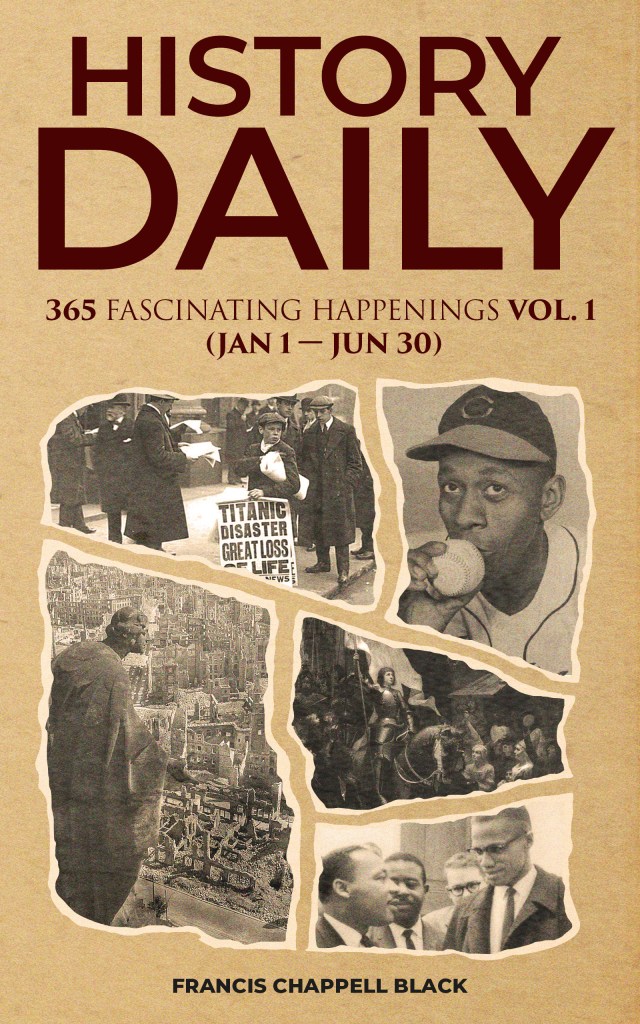
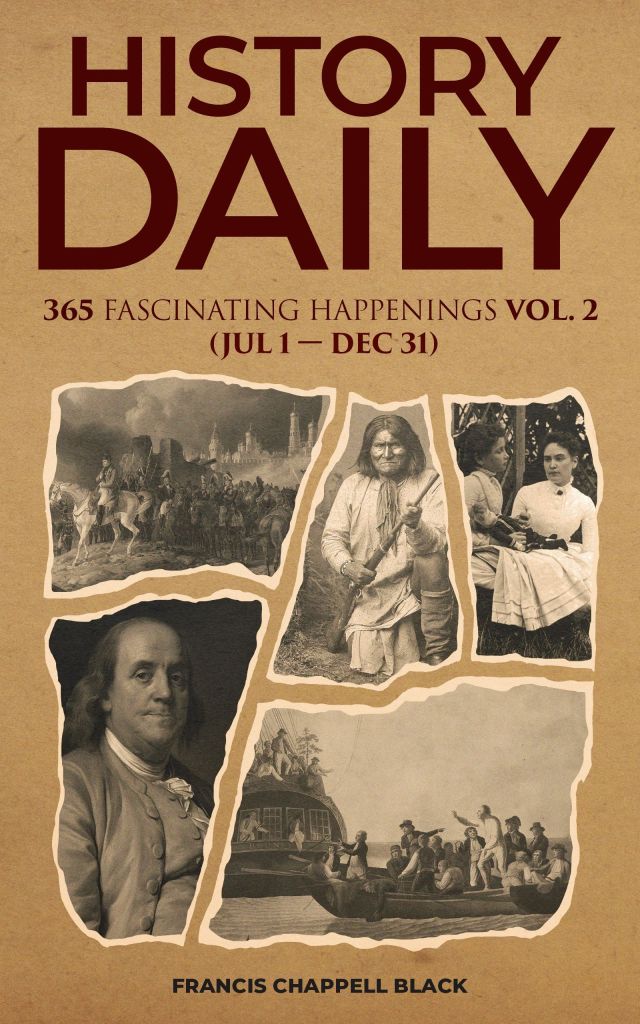
History Daily: 365 Fascinating Happenings Volume 1 and Volume 2 are for sale now from my publisher’s site:
25% OFF BOTH VOLUMES UNTIL NOVEMBER 7, 2023
https://yesterdaytodaybooks.etsy.com
Order your copy today to support our efforts.
Thank you.
Francis
 History Daily With Francis Chappell Black
Leave a comment