Subscribe to get access
Read more of this content when you subscribe today.
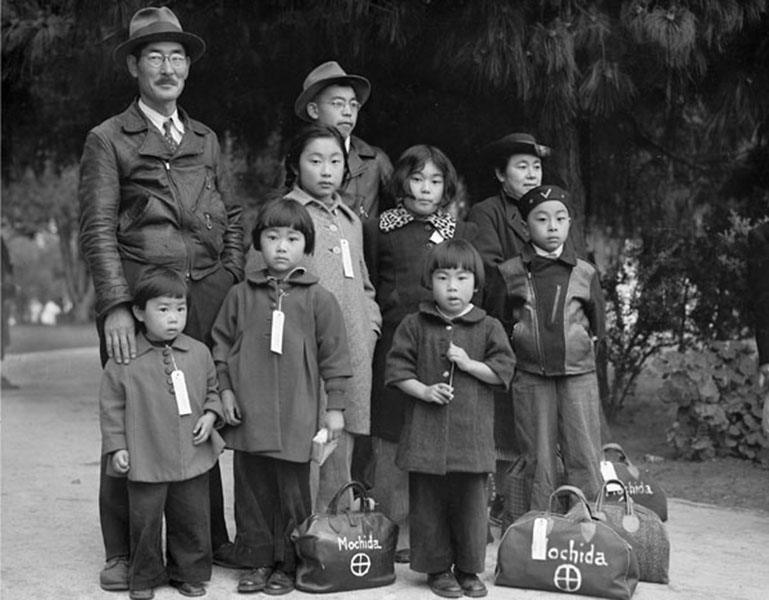
During World War II, the United States forcibly relocated and incarcerated at least 125,284 people of Japanese descent in 75 identified incarceration sites. Most lived on the Pacific Coast, in concentration camps in the western interior of the country. Approximately two-thirds of the inmates were United States citizens. These actions were initiated by President Franklin D. Roosevelt via Executive Order 9066 following Imperial Japan’s attack on Pearl Harbor.
Of the 127,000 Japanese Americans who were living in the continental United States at the time of the Pearl Harbor attack, 112,000 resided on the West Coast. About 80,000 were Nisei (literal translation: ‘second generation’; American-born Japanese with U.S. citizenship) and Sansei (‘third generation’, the children of Nisei). The rest were Issei (‘first generation’) immigrants born in Japan who were ineligible for U.S. citizenship under U.S. law.
Japanese Americans were placed in concentration camps based on local population concentrations and regional politics. More than 112,000 Japanese Americans who were living on the West Coast were incarcerated in camps which were located in its interior. In Hawaii (which was under martial law), where more than 150,000 Japanese Americans comprised over one-third of the territory’s population, only 1,200 to 1,800 were incarcerated. California defined anyone with 1⁄16th or more Japanese lineage as a person who should be incarcerated. Colonel Karl Bendetsen, the architect of the program, went so far as to say that anyone with “one drop of Japanese blood” qualified for incarceration.
These War Relocation Authority photos from The Library of Congress that depicted Japanese Americans before and during World War II and their incarceration in concentration camps.


Subscribe to continue reading
Become a paid subscriber to get access to the rest of this post and other exclusive content.
 History Daily With Francis Chappell Black