Subscribe to get access
Read more of this content when you subscribe today.
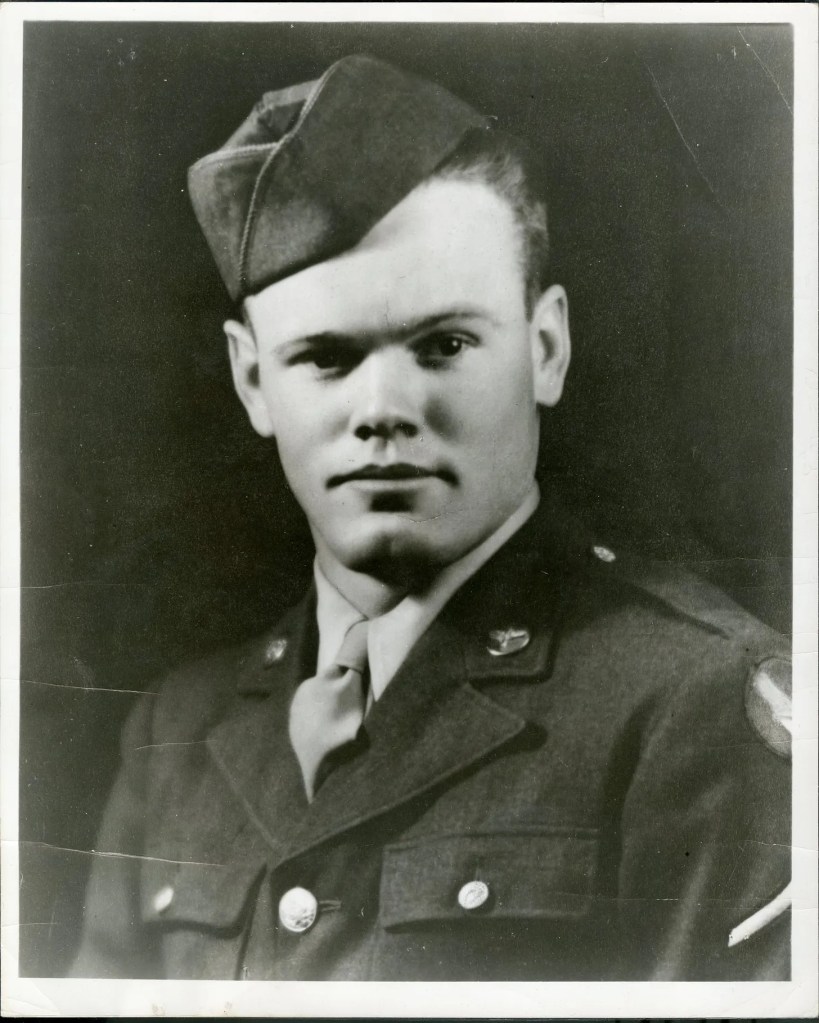
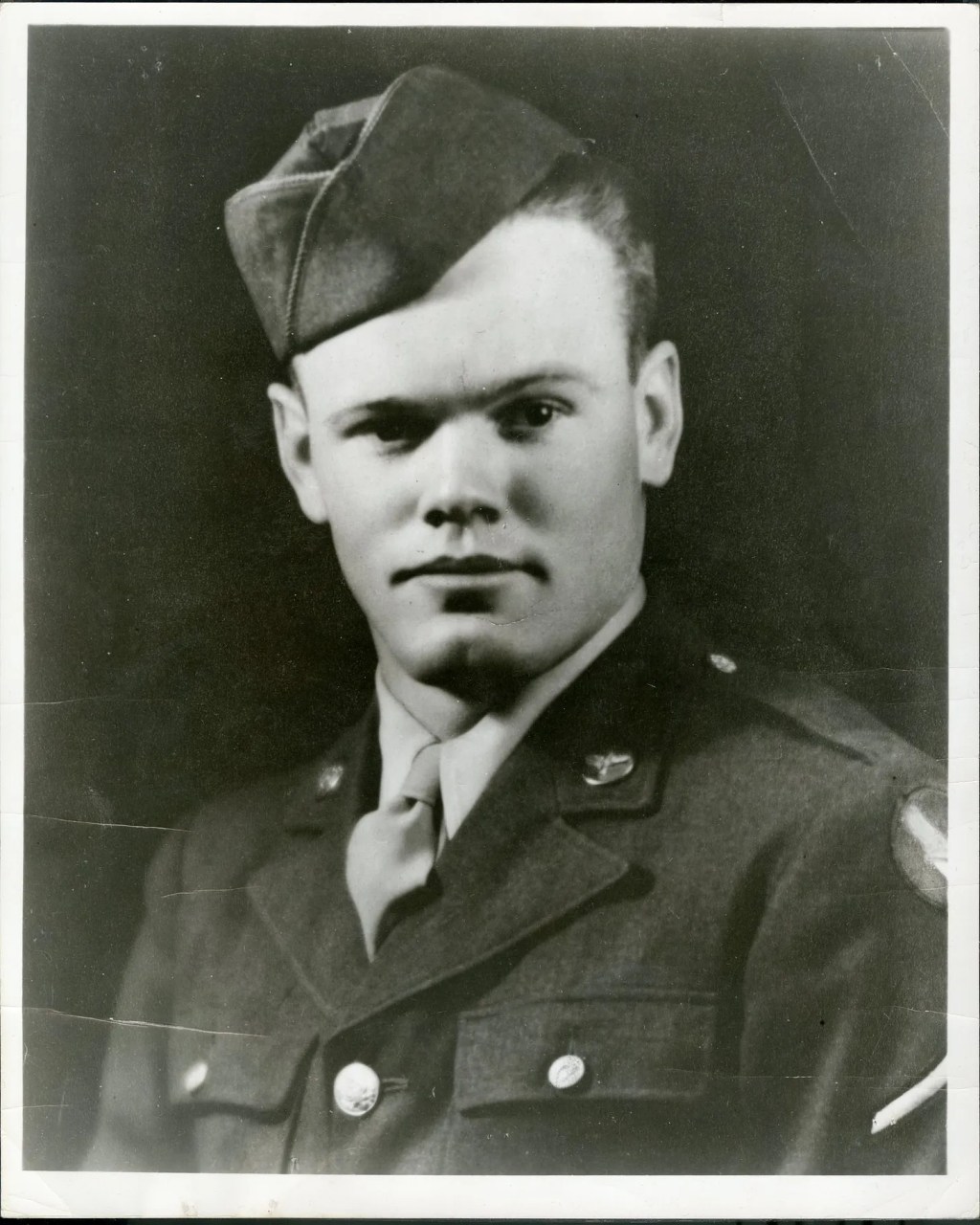
Image: Staff Sergeant Henry E. Erwin.
In the lead B-29 on a mission to Koriyama, north of Tokyo, he was tasked with releasing white phosphorus smoke bombs through a chute to assist with the assembly of 167 bombers from Guam and Tinian. There were initially no issues, but one phosphorous bomb exploded prematurely and ricocheted back into the aircraft, striking Erwin in the face as he knelt over the chute. His nose was crushed, and he was instantly blinded.
The aircraft’s forward cabin was instantly filled with choking, toxic smoke so thick that the pilot could no longer see his instruments, and he put the B-29 into a steep dive. Erwin was by now on fire and suffering from horrific burns, yet his first thought was to save the aircraft and crew. He felt around for the bomb, which was burning at a temperature of over 700 degrees centigrade, picked it up with his bare hands and began to make his way forward.
Reaching the navigator’s table, Erwin had to clutch the bomb to his body to unlatch it and move past, inflicting further severe injuries. He finally made it to the cockpit and was able to jettison the bomb through the copilot’s window before collapsing to the floor. As the smoke cleared and the pilot regained control at low altitude, the crew used fire extinguishers to put out Erwin’s burning body.
The pilot aborted the mission and made for Iwo Jima, while crewmen did what they could to help Erwin. They administered morphine, but the phosphorus continued to eat into his flesh and he was in terrible pain. Despite this, he remained conscious and was anxious to make sure that the rest of the crew were safe.
On arrival at Iwo Jima, doctors spent hours removing phosphorus fragments from Erwin’s body, each of which reignited as they were exposed to the air. There seemed to be little chance of his survival, but the officers of his Bomb Group were determined that his actions should be recognised before he died. They drafted a Medal of Honor citation, which was signed, approved and forwarded to Washington by Maj. Gen. Curtis LeMay the following morning.
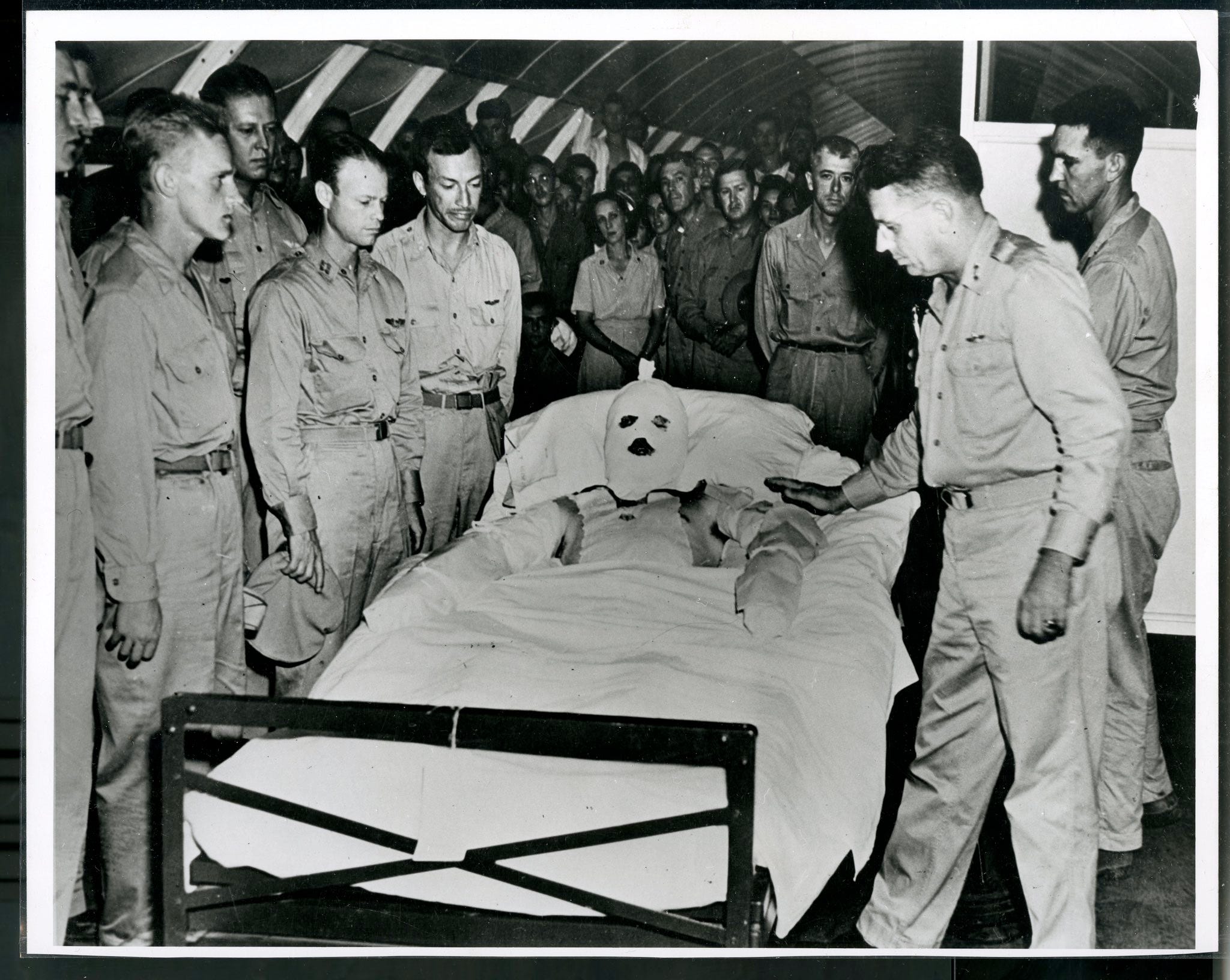
Image: Erwin and his crew (left) on the day of his Medal of Honor presentation, April 19, 1945, by Major General Willis H Hale. He wasn’t expected to survive at this stage.
The only Medal of Honor available in the Pacific was located in a display case in Honolulu, and an aircraft was dispatched to Hawaii to retrieve it without delay. According to some sources, the airmen sent to retrieve the medal broke open its case when no key could be found and effectively stole it. Meanwhile, Erwin was transferred to Guam for further operations, blood transfusions and antibiotic treatment. The medal was presented to him on 19th April, and LeMay later pulled strings to allow his brother, a Marine also serving in the Pacific, to be at his bedside.
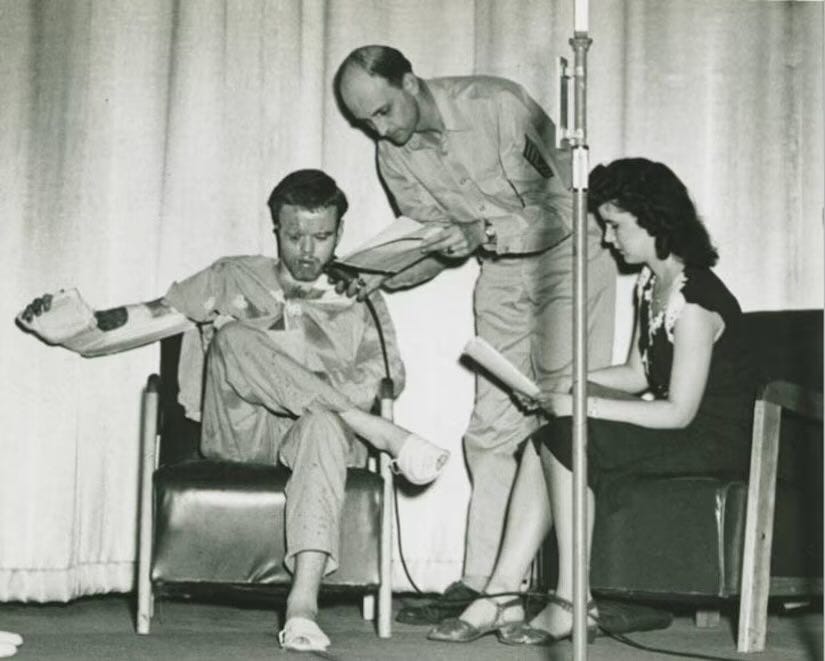
Image: Erwin taking part in a radio broadcast from an Alabama hospital during his recovery.
Despite all the odds, Erwin survived and, after a month, was transferred back to the United States. He remained in the hospital for 30 months, undergoing more than 40 operations, primarily to reconstruct his face. Erwin had lost one eye, an ear, his nose and several fingers but recovered partial sight in one eye and the use of his left arm.
Promoted to Master Sergeant and given an honourable discharge after his recovery, Erwin went on to work as a veterans’ benefits advisor. He and his wife Betty (who he had married shortly before deploying overseas) had four children together. He died in 2002, aged 80.
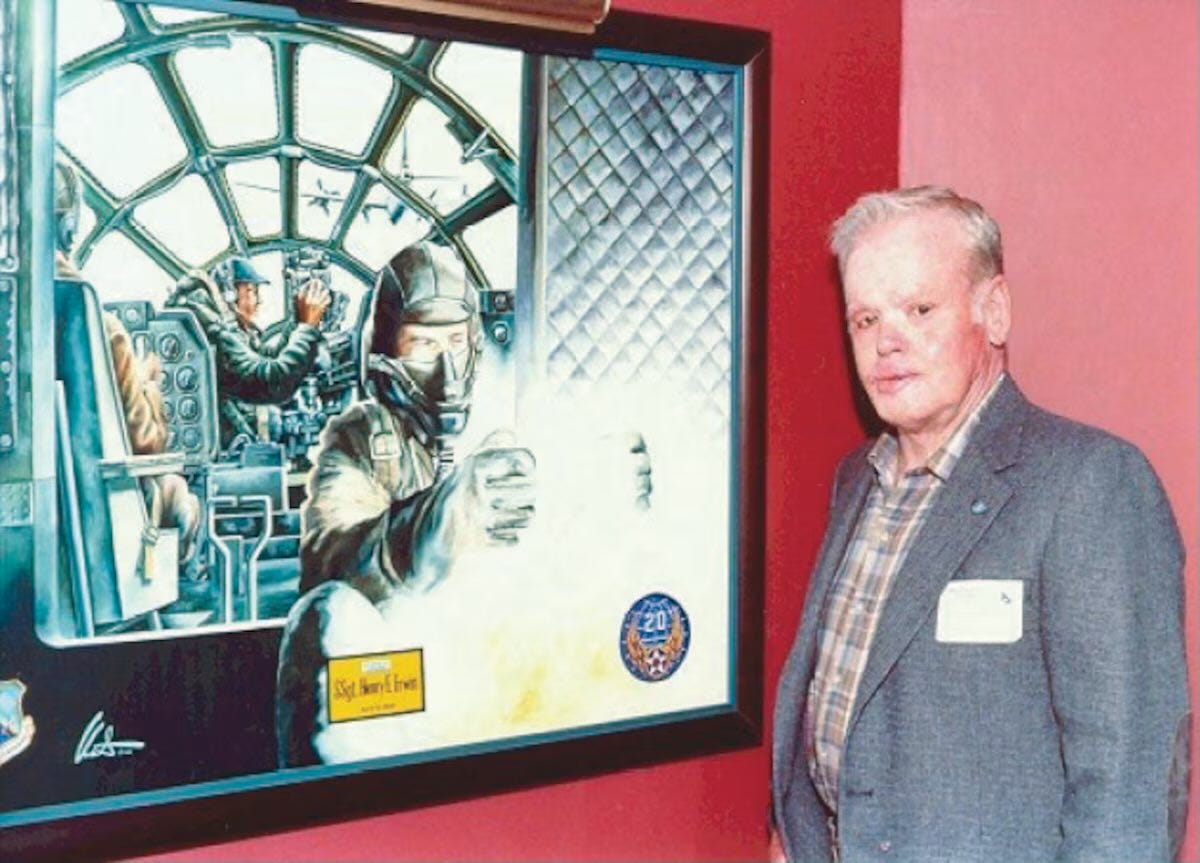
Image: Erwin in later life, standing with a painting depicting his actions of April 12, 1945.
#HenryRedErwin
https://amzn.to/3ACcgSr
Please consider supporting our ongoing efforts to bring quality and interesting historical content to our valued viewers. Your financial support every month goes a long way in helping us survive and go forward. Or, If You Would Like, You Can Make a One-Time Donation at https://buymeacoffee.com/francischao
Thank You For Considering to Support Us.
Francis
History Daily With Francis Chappell Black
Subscribe to get access
Read more of this content when you subscribe today.
 History Daily With Francis Chappell Black
Leave a comment