UNITED STATES ONE DOLLAR BILL
On August 8, 1786, the United States Congress unanimously chooses the dollar as the monetary unit for the United States of America.
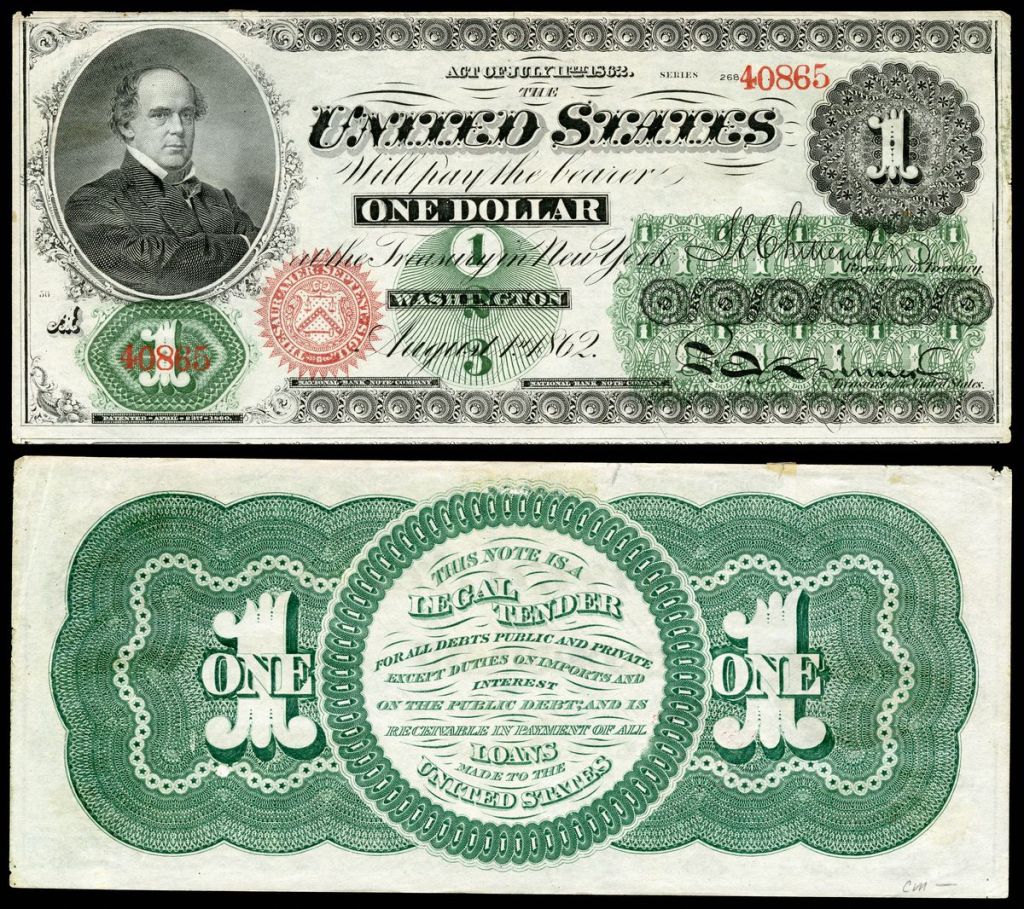
Image of the first US one dollar bill (United States Note) issued in 1862
BRIGHAM YOUNG LEADS THE MORMONS
On August 8, 1844, Brigham Young is chosen as the head of the Church of Jesus Christ of Latter-day Saints following the death of Joseph Smith.
Brigham Young was an American religious leader, politician, and settler. He was the second president of The Church of Jesus Christ of Latter-day Saints (LDS Church) from 1847 until his death in 1877 and is often known as the “American Moses” or the “Modern Moses” because of his role in leading the Latter-day Saints to Utah, similar to the biblical figure’s role in leading the Israelites to the Promised Land.
Beyond his religious leadership, Young was a significant political figure. He was appointed the first governor of the Utah Territory by President Millard Fillmore and served in this role from 1850 to 1857. Despite controversy and conflict with the U.S. government, Young remained a powerful figure in Utah, both religiously and politically, until his death.
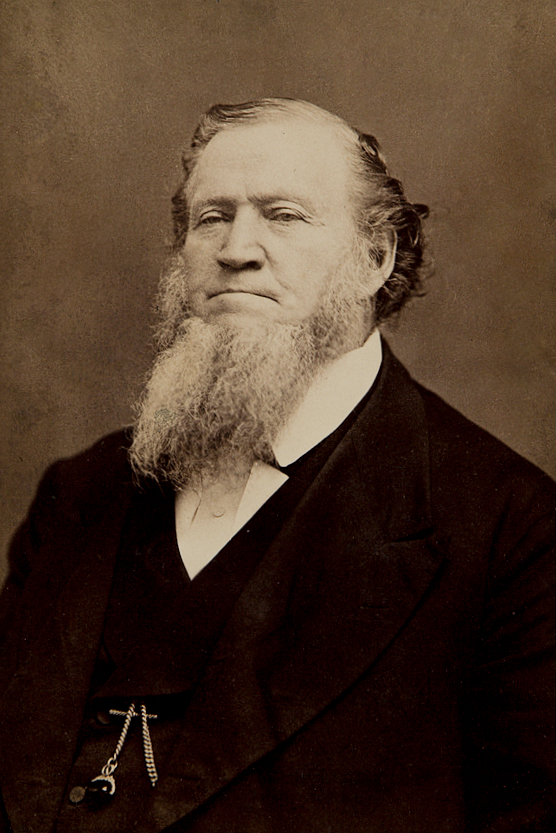
(Image: Latter Day Saints Religious Leader and Founder of Salt Lake City, Brigham Young. 1870. Wikimedia Commons.)
NUREMBERG TRIALS
On August 8, 1945, the United States, USSR, Britain and France sign Treaty of London which sets down procedures for the Nuremberg war trials of Nazi leaders.
At the end of World War II in Europe, the victorious Allied powers created the first international court to try war criminals from Nazi Germany. Headquartered in the German city of Nuremberg, the first and most famous trials of the major war criminals were held between November 20, 1945 and October 1, 1946, with verdicts announced on September 30 and October 1.
In the end, a large number of senior Nazi leaders were sentenced to death, including Hermann Goering (who killed himself with cyanide the night before his sentence was to be carried out), Karl Donitz, Martin Bormann (who was missing but sentenced to death in abstentia), Alfred Jodl, Joachim von Ribbentrop and various others. Some leaders, like Rudolf Hess and Albert Speer, were given prison terms in Spandau Prison. The death sentences were carried out on October 16, 1946.
Described as “the greatest trial in history” by one of the presiding judges, Nuremberg was a leap in international law, and would set a precedent for trying war crimes in an international court. The effect of Nuremberg can be seen in the modern-day International Criminal Court and with the prosecution of criminals for actions during wars in Yugoslavia and beyond.
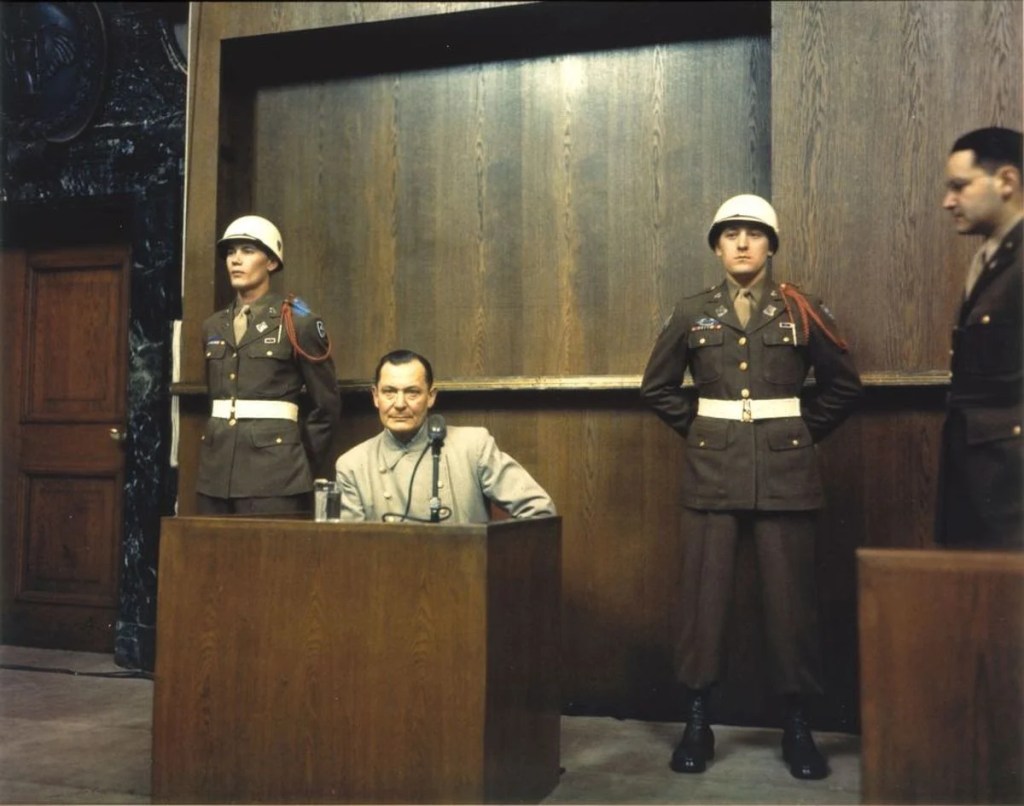
(Image: Hermann Goering on trial at the Nuremberg Trials. He would later be sentenced to death, but committed suicide the night before his sentence was to be carried out. Wikimedia Commons.)
 History Daily With Francis Chappell Black
Leave a comment