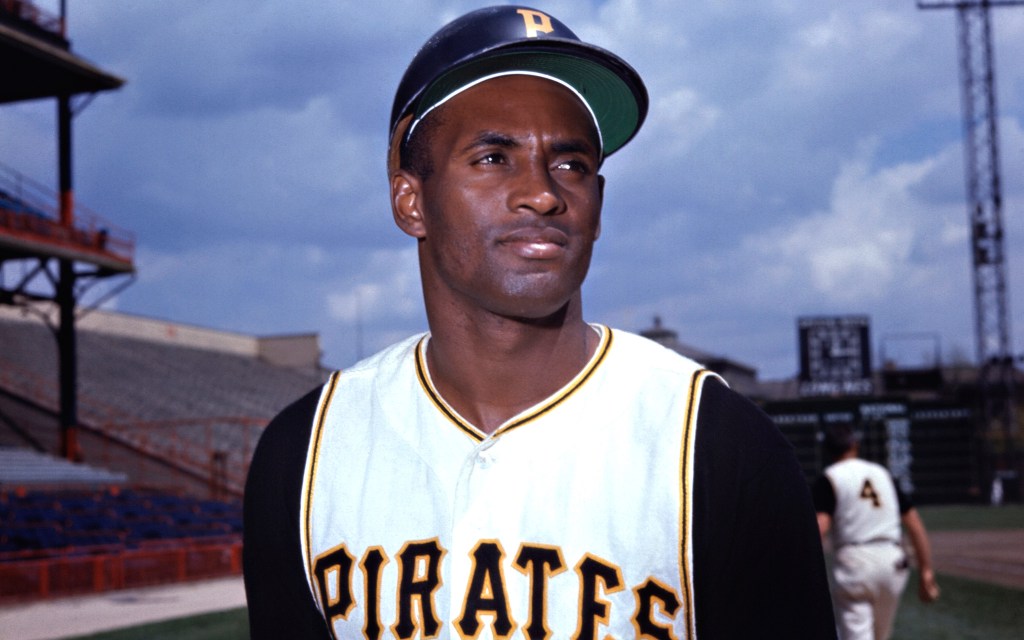
Image: Roberto Clemente (Public Domain)
On this day in history, December 31, 1972, Roberto Clemente, a future Hall of Fame baseball player, is killed along with four others when the cargo plane he is traveling in crashes into the ocean off the coast of Puerto Rico. Clemente was delivering relief provisions to Nicaragua after a destructive earthquake in the country the week before.
Clemente made his 3,000th hit in the season’s final game for the Pittsburgh Pirates at the end of September. He was a national hero in his native Puerto Rico, where he spent most of the off-season doing charity work. Some of his charitable efforts had taken him to Nicaragua, so Clemente was distraught when he discovered that hardly any aid was getting to victims of a destructive December 23rd earthquake near Managua.
The 6.5-magnitude earthquake that struck the Nicaraguan capital on December 23, 1972, killed thousands and left hundreds of thousands displaced. Although the catastrophe occurred in a country over 1,500 miles away from Puerto Rico, Clemente felt obligated to help his fellow Latinos.
Instead of merely contributing money, he followed reports from the disaster zone on his ham radio and created a relief committee to help the quake-ridden nation. Clemente used his celebrity to ask for donations on Puerto Rican television and door-to-door in wealthy communities. He labored 14-hour days surrounding the island, including Christmas Eve and Christmas, to stage local relief drives and conduct baseball clinics. Clemente’s committee collected over $150,000 in donations and gathered 26 tons of food, clothes, and medicine.
Clemente decided to collect supplies personally and have them delivered. The plan went amiss when Clemente chose a plane owned by Arthur Rivera for the operation. Rivera had bought a frail, old DC-7 propeller plane to accompany the DC-3 he used to move cargo in the Caribbean. The aircraft was in such terrible shape that many questioned why Rivera had even bothered to acquire it. The DC-7 even had to be transported from Miami to Puerto Rico.
Rivera painted the exterior of the cargo plane but did little else to the engine or any other part of the aircraft. This was no surprise to safety crews at the airports where Rivera worked: He had constantly been charged with safety infractions in previous years. On December 2, Rivera took the DC-7 out to examine the engine but forgot to close the hydraulic pump, and he subsequently put the plane in a drainage ditch. This action twisted two of the propeller blades and smashed the landing gear. Only some of these damages were fixed before the December 31 flight.
When he received rumors of crooked Nicaraguan soldiers holding up aid deliveries, an appalled Clemente decided to escort the relief supplies on a New Year’s Eve journey. On the previous day, Clemente was loading relief supplies at San Juan International Airport’s cargo area when he discovered there were far more provisions than could be hauled on the plane. Rivera offered to ferry the excess supplies to Nicaragua for $4,000, failing to tell Clemente that he had no crew for the aircraft. Clemente approved the offer, and Rivera struggled to acquire a pilot. He located Jerry Hill, who had a terrible record and began to load the aircraft. It was later concluded that Rivera overloaded the plane. Someone at the airport informed Clemente that the plane was grossly overfull when he was about to embark.
On the evening of December 31, 1972, Clemente said farewell to his wife and three sons and boarded the DC-7 full of cargo. The plane took off at 9:00 p.m., and the noises of engine failure could be heard as it taxied down the runway. The poorly loaded plane was over the maximum allowable weight by 4,000 pounds, and it wrestled with lifting off as an engine failed during takeoff.
It only reached an altitude of 200 feet before it exploded and crashed into the ocean. Rescue workers were dispatched immediately, but the undertaking was unfeasible in the darkness. None of the five people aboard lived. Clemente’s body was never recovered. The news hit Puerto Rico hard – one acquaintance of Clemente called it the “night that happiness died.”
An investigation into the crash revealed that the plane was not airworthy and that the pilot had erred by over-boosting the engines.
In 1973, Clemente was posthumously invested in the Baseball Hall of Fame. In 2002, he was bestowed the Presidential Medal of Freedom. While baseball lost a star, the world lost a humanitarian. Clemente’s memory, nonetheless, has survived. Schools, parks, bridges, and ballfields are named in his honor, from Puerto Rico to Pittsburgh to Germany.
Following Clemente’s death, the Puerto Rican government donated 300 acres close to the barrio where he grew up to accomplish his dream of a sports complex. The Roberto Clemente Sports City has provided for over one million children.
Major League Baseball celebrates Roberto Clemente Day every September 15, and each year it awards the Roberto Clemente Award to a player who “best exemplifies the game of baseball, sportsmanship, community involvement, and the individual’s contribution to his team.”
Clemente’s sons have maintained their father’s charitable work through the Roberto Clemente Foundation, which supports disaster relief and baseball clinics and programs for underprivileged youth. The foundation’s philanthropic works keep alive the spirit of some of Clemente’s words: “If you have a chance to accomplish something that will make things better for people coming behind you, and you don’t do that, you are wasting your time on this Earth.”
Subscribe to “History Daily with Francis Chappell Black’s” Blog to receive regular updates regarding new content:
Help us with our endeavors to keep History alive. With our daily Blog posts and our publishing program we hope to inform people in a comfortable and easy-going manner. This is my full-time job so any support you can give would be greatly appreciated.
 History Daily With Francis Chappell Black
Leave a comment